

The Race for Online Authenticity
Let’s lean fully into the wandering-observer voice.
Less “structured essay.”
More: someone staring at the internet too long and noticing civilization becoming aesthetically self-aware.
The Race for Online Authenticity
There was a time when people simply posted things online.
A crooked coffee photo.
A blurry cat.
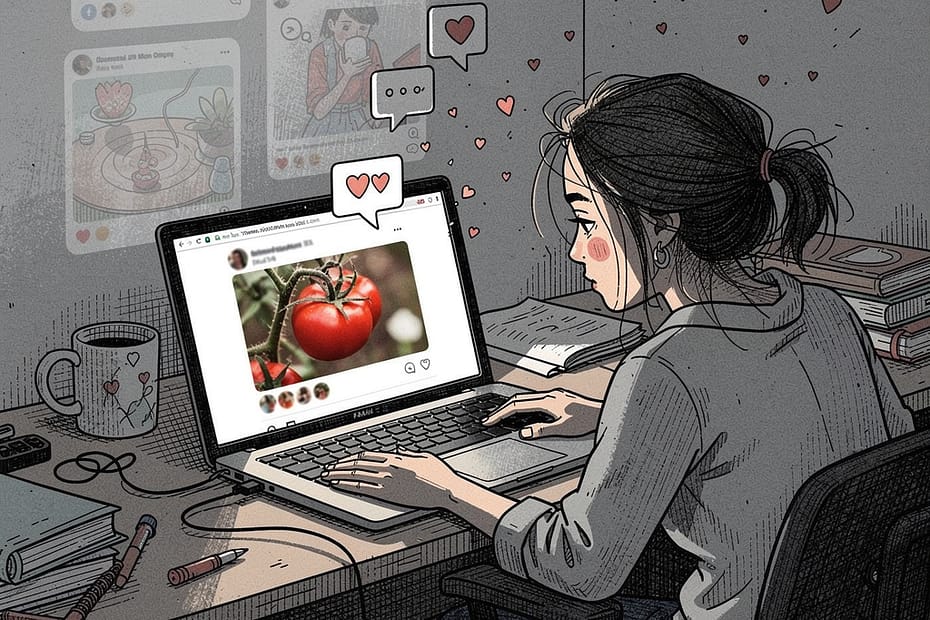
A tomato from the garden photographed with the urgency of breaking news.
Nobody called it “content.”
Nobody spoke about “narratives.”
The tomato did not symbolize resilience, intentional living, or the healing journey of reconnecting with nature after burnout.
It was just a tomato.
Then the internet became professional.
Not officially, of course.
Nobody announced it.
There wasn’t a ceremony.
But slowly everyone began sounding oddly prepared for public relations interviews about themselves.
People no longer have opinions. They have positioning.
Even casual posts arrive carrying the emotional posture of keynote speakers.
Someone writes three lines about making coffee and it somehow ends with:
“This is your reminder to slow down.”
Below that, thousands of people nod solemnly in the comments as though a monk has descended from the mountains carrying sacred espresso wisdom.
And maybe I imagined this, but I’m fairly certain the spaces between paragraphs keep getting larger.
The silence itself now performs importance.
Like this.
See?
Very profound already.
The strange thing is that everybody claims to hate fake authenticity while simultaneously speaking in exactly the same tone.
Soft certainty.
Gentle authority.
Carefully calibrated vulnerability.
At some point the entire internet began sounding like a therapist who recently discovered analytics.
Nobody simply shares thoughts anymore.
Thoughts arrive optimized for emotional friction.
Every sentence feels lightly focus-grouped by invisible forces.
Even rebellion feels strangely well-lit now.
You’ll see someone declare:
“I refuse to follow trends.”
And somehow the post still arrives with cinematic lighting, strategic imperfection, a newsletter link, and a thumbnail where they stare thoughtfully into middle distance like a philosopher forced to become a startup founder.
Beautiful.
Truly beautiful.
And then came the Authenticity Detectives™.
These people wander the platforms searching for traces of synthetic humanity.
“This feels AI-generated.”
“This vulnerability seems rehearsed.”
“This story structure is suspiciously clean.”
Honestly, after ten years of algorithms teaching humans how to communicate, I’m no longer sure anybody knows what “natural” sounds like anymore.
Because humans adapted too.
Of course they did.
Spend enough years inside recommendation systems and eventually your internal monologue starts sounding like engagement optimization.
You begin accidentally speaking in headlines.
You catch yourself saying things like:
“People aren’t ready for this conversation.”
Nobody knows when this happened.
One day we were posting badly cropped vacation photos. The next day everybody was “building a personal ecosystem.”
A completely normal woman can no longer upload soup without accidentally presenting a lifestyle philosophy.
Meanwhile the internet keeps rewarding the oddest things.
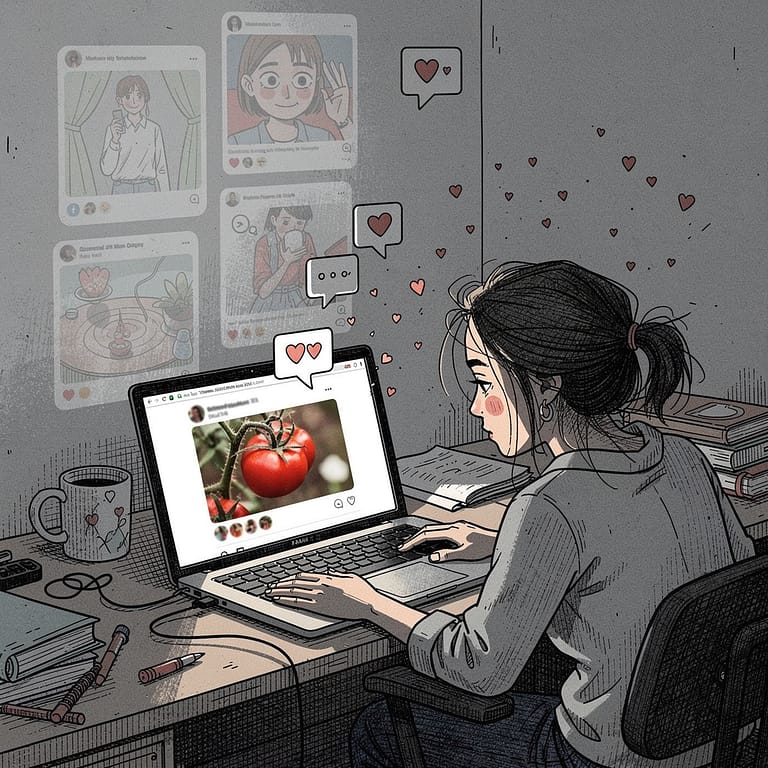
Some exhausted person posts an unfocused picture of tomatoes from their garden and suddenly thousands of strangers appear beneath it experiencing what they describe as “digital honesty.”
Ten years ago people would’ve ignored it.
Now the tomatoes feel emotionally available.
I think people are just tired.
Tired of optimization.
Tired of performing intelligence.
Tired of translating themselves into something searchable, monetizable, explainable.
Perfection has started feeling slightly sinister.
Too polished and people become suspicious.
Too inspiring and it sounds monetized.
Too authentic and everyone assumes there’s a course launching next Thursday.
So now the internet searches desperately for small signs of life.
A typo.
A strange sentence.
Someone laughing too early.
An unfinished thought that clearly escaped before editing arrived to smooth its edges.
Things that still feel touched by an actual nervous system.
Maybe that’s why the tomatoes matter now.
Not because they’re profound.
Because they aren’t trying to be.
Which, in 2026, is apparently revolutionary. 😏
Thank you for reading and sharing!
Source OpenAI’s ChatGPT Language Model and DALLE – Images Picsart

Invest in your future & learn
Learn affiliate marketing & build your own website.
Heads up! Make sure you sign up using my referral link to get access to all features.
👉 Sign Up


