
Storytelling Techniques for Your Personal Blog
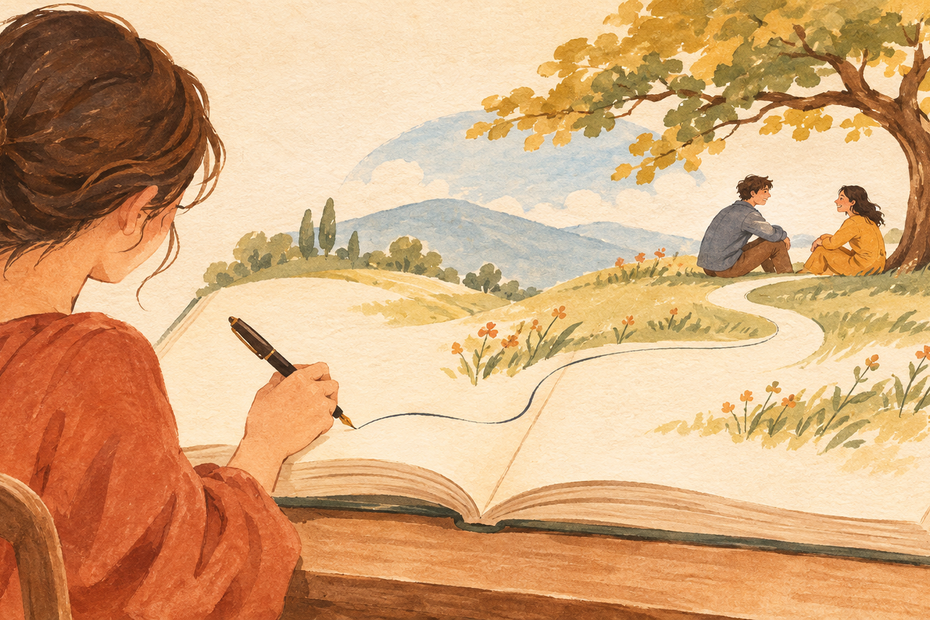
A writer’s pen becomes a winding path through an open notebook, leading to two people sharing a story beneath a golden tree.
Think about the blogs you remember most. Chances are, they shared a story that struck a chord with you—something that echoed your thoughts, challenged a belief, or made you feel understood.
That’s what storytelling brings to a personal blog. You’re sharing experiences, ideas, and emotions in a way that gives readers a reason to care. The information matters, but the story helps it stay with them long after the screen goes dark.
A memorable post can become a conversation starter. Readers may return to it, share it, or bring it up in a conversation of their own. That connection begins with how you tell the story.
Know Your Audience and Tailor Your Stories
Understanding your audience helps you decide which experiences to share and which details will matter to them. Their interests, values, and challenges give you a clearer picture of who’s on the other side of the screen.
Start with what you know about your readers. Demographics such as age and location can offer context, but their questions and concerns often tell you more about what they need from your blog. Pay attention to the things they ask about, respond to, or share from their own lives.
Reader personas can help organize those insights. These fictional profiles represent the people you’re writing for and remind you of their interests and needs. Keep them grounded in what you’ve learned about your readers rather than assumptions about who they ought to be.
Think of your content as a conversation. Your experiences give the story its voice; understanding your audience helps you find the parts that connect with their world.
Build Characters Readers Care About
Characters give readers someone—or something—to follow. In a personal blog, they might be you, another person, an idea, or even a personified object. What matters is that they carry the story forward.
Relatable characters have desires, flaws, and reasons for doing what they do. Readers don’t need every detail of their background, but they need enough to understand what matters to them and why a challenge feels significant.
A narrative arc helps bring those elements together:
- Introduce the situation: Who is involved, and what do they want?
- Develop the challenge: What gets in the way, and how do they respond?
- Show the outcome: What changes, gets resolved, or remains uncertain?
This gives your story direction without requiring every experience to end neatly. Sometimes the useful part is the question you’re still carrying.
Dialogue and inner thoughts can bring readers closer to the people in your story. Use them where they reveal personality, tension, or motivation. In personal accounts, make it clear when you’re recalling the gist of a conversation rather than quoting exact words.
Use Emotion with Honesty and Care
Emotion helps readers understand why an experience matters. Curiosity, disappointment, relief, and hope can all give a story depth when they belong naturally to what happened.
Consider the feeling at the heart of your story. What did the experience mean to you? What might readers recognize in it? Let that guide your choice of details and tone, without trying to dictate how everyone should feel.
Authenticity and sensitivity matter, especially when writing about painful experiences. Share what you’re comfortable sharing, respect other people’s privacy, and leave room for readers whose experiences differ from yours.
You can also learn by reading bloggers whose work moves you. Notice how their language, pacing, and choice of detail create an emotional connection. The useful lesson is how they make an experience feel real while keeping their own voice.
Choose Visuals That Help Tell the Story
Images, videos, and graphics can add another layer to your writing. They might establish a mood, clarify an idea, or help readers picture something that words alone don’t quite convey.
Choose each visual for the role it plays. A relevant image can invite readers to pause and notice a detail; an unrelated one can interrupt the thread of the story.
Stock photo sites and design platforms can help you find or create suitable visuals. Check usage rights, and look for images that fit both the subject and the tone of your blog. Original photographs or illustrations can also make a post feel more personal.
Add descriptive alt text where an image conveys information, and use captions when they provide useful context. The visual and the writing should work together, each contributing something to the reader’s experience.
Invite Readers into the Conversation
Interactive storytelling gives readers a way to contribute. Polls, quizzes, and comment prompts can all help, but choose them because they suit the story.
A relevant question at the end of a post may be enough. Invite readers to share an experience, reflect on a choice, or offer a perspective you haven’t considered. Give them something specific to respond to.
Social media can extend that conversation. Readers may connect with your story and with one another through comments, groups, or shared experiences. Those exchanges can reveal questions worth exploring in future posts.
Pay attention to the responses alongside your analytics. Comments, shares, and return visits can offer clues about what resonates, though no single metric tells the whole story. Look for patterns, and use them to refine how you write.
Your readers bring experiences of their own. Leave them room to add something, and a personal story can become a shared conversation.

Thank you for your visit!
Source OpenAI’s ChatGPT Language Models and Dalle
Related Posts