
Choosing a Niche When You Keep Second-Guessing It
The fastest way to settle on a niche is to stop debating it and publish six posts in it. Those posts will tell you more about your fit with the topic than another week of weighing “too crowded” against “I don’t know enough”.
Choosing a niche gets stuck because both objections sound reasonable, and neither can be settled by thinking. One voice says a thousand sites already cover this. The other says you are no expert. Each wins on alternate days, and the site stays empty while they argue. 😏
Is your niche too crowded, or are you just nervous?
Crowded usually means people want the topic. A niche with no competition tends to have no competition because nobody searches for it or nobody buys anything in it. A busy topic is a sign of demand, and your real job is to find a corner of it where you can be specific.
“Cameras” is crowded. “Cameras for people who film their own cooking” is a smaller room with a clearer reader in it. The topic did not change, only how closely you looked at who it is for.
Here is a quick way to tell crowded from nervous. If you feel the same dread about every topic you consider, the topic is not the problem. If you have changed your mind more than twice this week and published nothing, the same applies. A real problem with a niche is specific, such as “there is nothing here I could honestly recommend”. Nerves are vague, such as “someone must be doing this better”.
If that sounds familiar, I have a short piece on why not every thought needs more thinking. Thinking has a limit, and you have probably passed it.
What if you don’t know enough to write about it?
You need to know more than your reader, not more than the experts. Your reader is somebody a few steps behind you, with a handful of questions and no patience for jargon. If you can answer those questions clearly, you know enough to start.
Affiliate content also does not require a pretence of expertise. Useful how-tos, honest comparisons and plain reviews do the work. Where you have used a product, say so and describe what happened. Where you have not, say you researched it and name where the information came from. Readers forgive “I’m still learning this”. They do not forgive a bluff.
Writing is also one of the quicker ways to learn a subject. To explain how something works you have to check that you understand it, and the gaps show up on the page. A niche you know a little about can become one you know well after a month of writing. A niche you only think about stays exactly as unfamiliar as it was.
Three questions to ask before you commit
Keep these short and answer them on paper, because answers kept in your head tend to change when you are tired.
- Can you list twenty questions a beginner would ask about this topic? Write them down in ten minutes without searching. If you reach twenty, you have material. If you stall at six, the niche may be too narrow, or you may need to browse forums and comment sections first to hear how beginners phrase things.
- Is there something you could honestly recommend? Affiliate content needs a route to a product, tool or service that readers actually buy. If the topic has plenty of discussion but nothing to recommend, it makes a good hobby blog and a weak affiliate site.
- Would you read about this on a quiet Saturday without being paid? You will be writing about it for months. If the idea of a fifth review of the same type of product makes you groan, listen to the groan.
Two yeses and one maybe is a decent result. Three maybes means you should look at a neighbouring topic before you build anything.
Test it with a handful of real posts before you tattoo it on your website
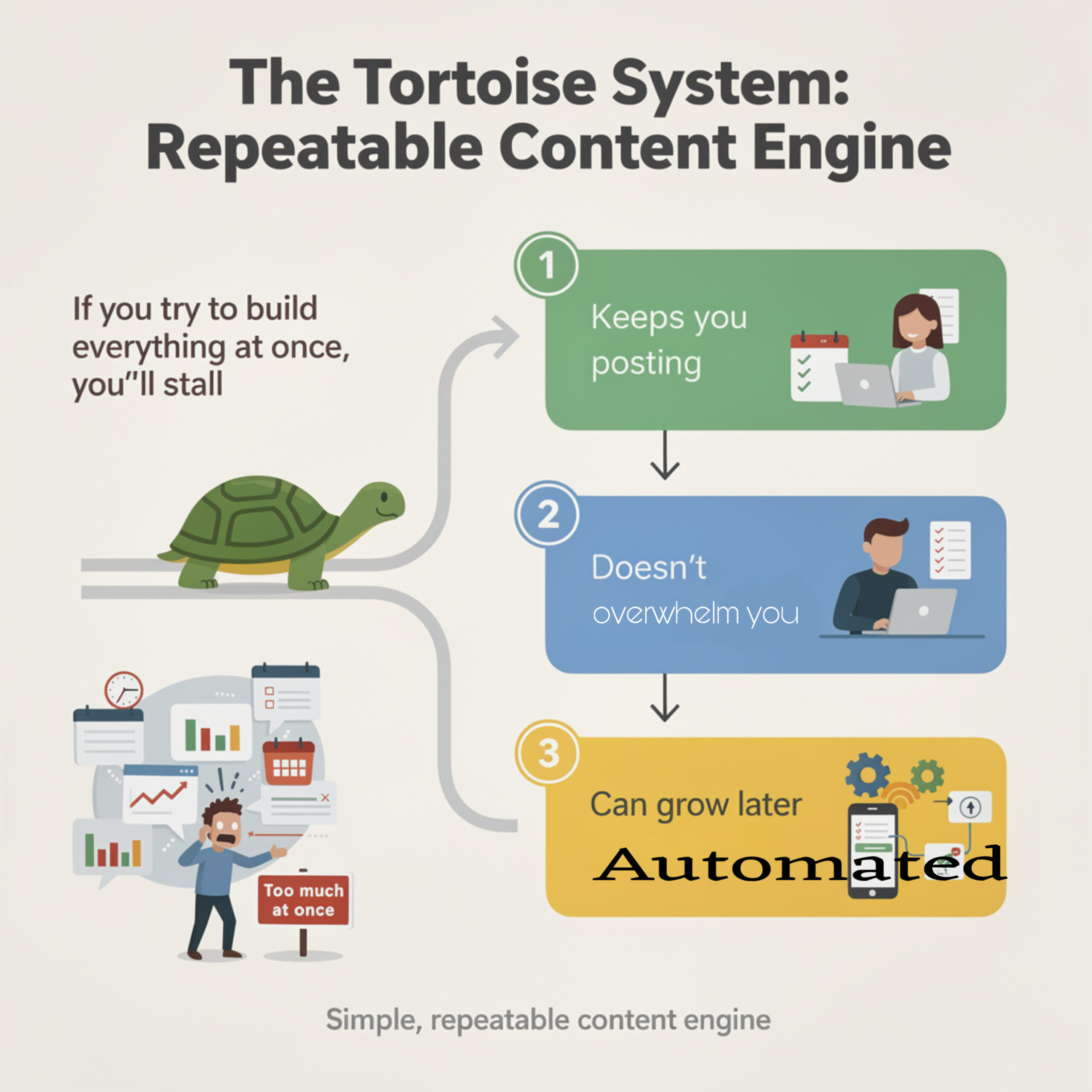
A niche is a hypothesis until it has posts under it. So publish a small batch on a real site and see what the work feels like. Six posts is enough to learn from and small enough to walk away from.
A sensible mix looks like this.
- Two how-to posts that answer beginner questions from your list.
- Two reviews or comparisons of things you can recommend honestly.
- One post that answers a single, specific question in under a thousand words.
- One post of your choice, on whatever part of the topic pulled you in most.
Say you are torn between home coffee brewing and budget travel gear. Write three posts in each and pay attention to which ones you finish without bargaining with yourself. One set will come out faster, you will have more to say, and the headlines will arrive on their own. The other will feel like homework. That difference is information you could never get from a pros and cons list.
Judge the writing before you judge the traffic. A handful of new posts rarely gets enough visits to say anything reliable, so early numbers will mostly mislead you in one direction or the other. What you can judge right away is how easy it was to find questions, whether you ran dry by post four, and whether you wanted to dig deeper into any part.
A real website helps because publishing changes how you think. A draft in a folder is a private idea. A live post has a URL and a reader, and it makes the niche feel real in a way a notebook never will.
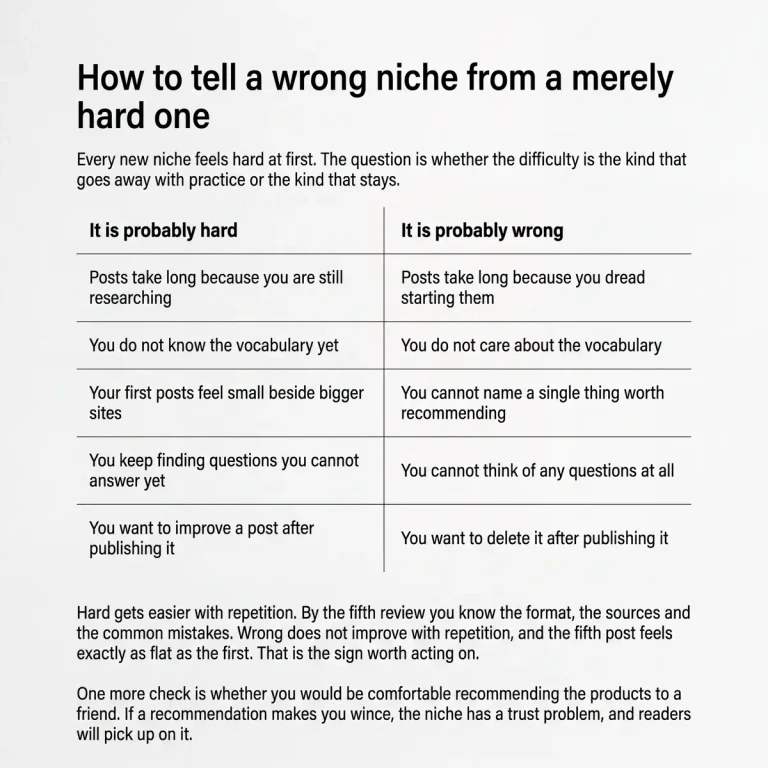
How to tell a wrong niche from a merely hard one
When to narrow, when to widen, and when to leave it alone
Narrow it when your posts read like general overviews that anyone could have written. A tighter reader gives you sharper posts. “Gardening” becomes “growing vegetables on a small balcony”, and suddenly every post has a point of view.
Widen it when you run out of questions around post four. That usually means the niche is too small to sustain a site. Step up one level, so “balcony tomatoes” becomes “container vegetables”, and keep what you have already written, since those posts still fit under the wider topic.
Leave it alone when the writing is going fine and the only complaint is that it is early. Nerves do not count as a reason to change course. Neither does the arrival of a competitor you had not noticed, or a topic that suddenly looks more exciting on someone else’s site. A niche needs a few months of steady posts before it can tell you anything about itself.
A useful rule is to change the niche only after you have finished the batch, never in the middle of it. Abandoning a topic after two posts teaches you nothing about the topic and a fair amount about your habits.
Picked one? Where to go next
Write down the niche in one sentence and the reader in another, and pin both where you will see them. Then plan the next six posts from the questions on your list and publish them on a schedule you can keep. A steady, modest schedule beats a burst of ten posts followed by silence.
When the batch is done, review it the way you would review a product. What was easy, what was slow, and what would you do differently? Adjust the angle, narrow or widen if the evidence says so, and carry on. If you want a map for the stages after the niche is chosen, my affiliate marketing roadmap from zero website to first commission picks up where this article stops.
If you want a real website to test your niche on, start building with Wealthy Affiliate through my referral link, and bring your niche doubts along. Kre8or is there too if video is your thing… coffee optional ☕