Set Up Your First Affiliate Website Step-by-Step
Building an affiliate website is one of the best ways to get started with online income. I remember my first attempt, and while it felt a bit overwhelming, once I broke things into smaller steps, everything started making sense. Whether you’re hoping to earn some extra cash or want to turn affiliate marketing into a real business, the right setup is the key to long-term results.
Your first website can feel like a big leap, especially if you’re new to websites and affiliate programs. I’m going to walk through exactly how to set up your first affiliate website, step by step, in easy language. By the end, you’ll know how to choose your niche, get your site online, create content, and get ready to earn your first commissions.
Here’s how to start strong as a new affiliate marketer without any tech headaches or second-guessing.
Step 1: Pick Your Niche
Choosing a niche is one of those things that sounds simple but can cause a lot of overthinking. I’ve seen people stuck here for weeks! The niche is just the specific topic you want your website to focus on. Picking something too broad (like “fitness”) can make it hard to get noticed. Zooming in a bit, like run gear for beginners, healthy recipes for busy parents, or pet care for indoor cats, helps your site stand out.
How to Choose a Good Niche:
- List what you’re interested in or want to learn about.
- Check how many products or services are available to promote.
- Use search tools (like Google Trends) to see if people look this up.
- Look at other blogs or affiliate sites for inspiration.
Tip:
Picking a niche you enjoy makes it way easier to write articles and stick with it for the long haul. This keeps your motivation high and helps you provide real insights for your audience.
Step 2: Sign Up for Affiliate Programs
After deciding on a niche, it’s time to find some affiliate programs. These are the sites and brands that pay you commissions when someone buys through your links. Amazon Associates, ShareASale, and CJ Affiliate are pretty handy starting points, and most brands also have their own programs.
What to Look For in an Affiliate Program:
- Payouts that make sense for your audience; sometimes it’s a few dollars per sale, other times much more.
- Trusted brands that people know or products with good reviews.
- Simple signup process with clear rules.
Some programs need an approved website before you can join, so it’s fine to wait until your site is up. Just keep a list so you’re ready. Consider reading online reviews about these programs to see what commissions and support systems they provide.
Step 3: Get a Domain Name and Hosting
This step is where things start to feel real—your own website! Picking a domain name, which is the .com or .net, is like choosing the name for your business. I usually keep it short, memorable, and related to my niche. Most people use .com whenever possible, as it’s the most recognizable.
Website hosting is where your site lives online. Companies like Bluehost, SiteGround, or Namecheap are good options. You’ll sign up, buy your domain, and connect them together in one step with most hosts.
Quick Steps:
- Brainstorm 5–10 domain names and check what’s available.
- Buy your domain and hosting package. Most bundle these together, which makes it easy.
- Save your login details somewhere safe, as you’ll need to access your host and domain frequently.
If you want to skip the tech side, sites like WordPress.com or Wix bundle everything, but for long-term growth, self-hosted WordPress is usually the best path.
Step 4: Install WordPress and Basic Plugins
WordPress is the most common way to build affiliate websites. I started out using it, and there’s a reason it’s so popular: it’s flexible, free, and you can make your site look just about any way you want.
How to Get WordPress Online:
- Most hosting companies have a one-click install for WordPress, making setup quick from your hosting dashboard.
- Follow the prompts and set your administrator username and password.
Useful Plugins to Add:
- Yoast SEO or Rank Math – For getting found on Google.
- Pretty Links – For managing affiliate links.
- UpdraftPlus – For automatic backups that keep your content safe.
Try not to go wild with plugins, as too many can slow your website down. Stick with a handful of essential ones to keep your site running smoothly and securely. Always update your plugins to get the latest features and protection.
Step 5: Choose a Simple Theme and Customize Your Site
Picking a WordPress theme gives your site its style and look. I always lean toward clean, minimal themes because they load fast and help your content shine. Lots of themes are free, like Astra, Kadence, or Blocksy, and you can always swap later if you want to get a new look.
Pages to Set Up:
- Home Page – A quick intro and what your site is about.
- About Page – Share a bit about who you are and what you offer.
- Contact Page – Make it easy for people to reach you. Contact form plugins help here.
- Privacy Policy – For user trust and meeting ad or affiliate rules. Lots of free templates are available online to help you set this up quickly.
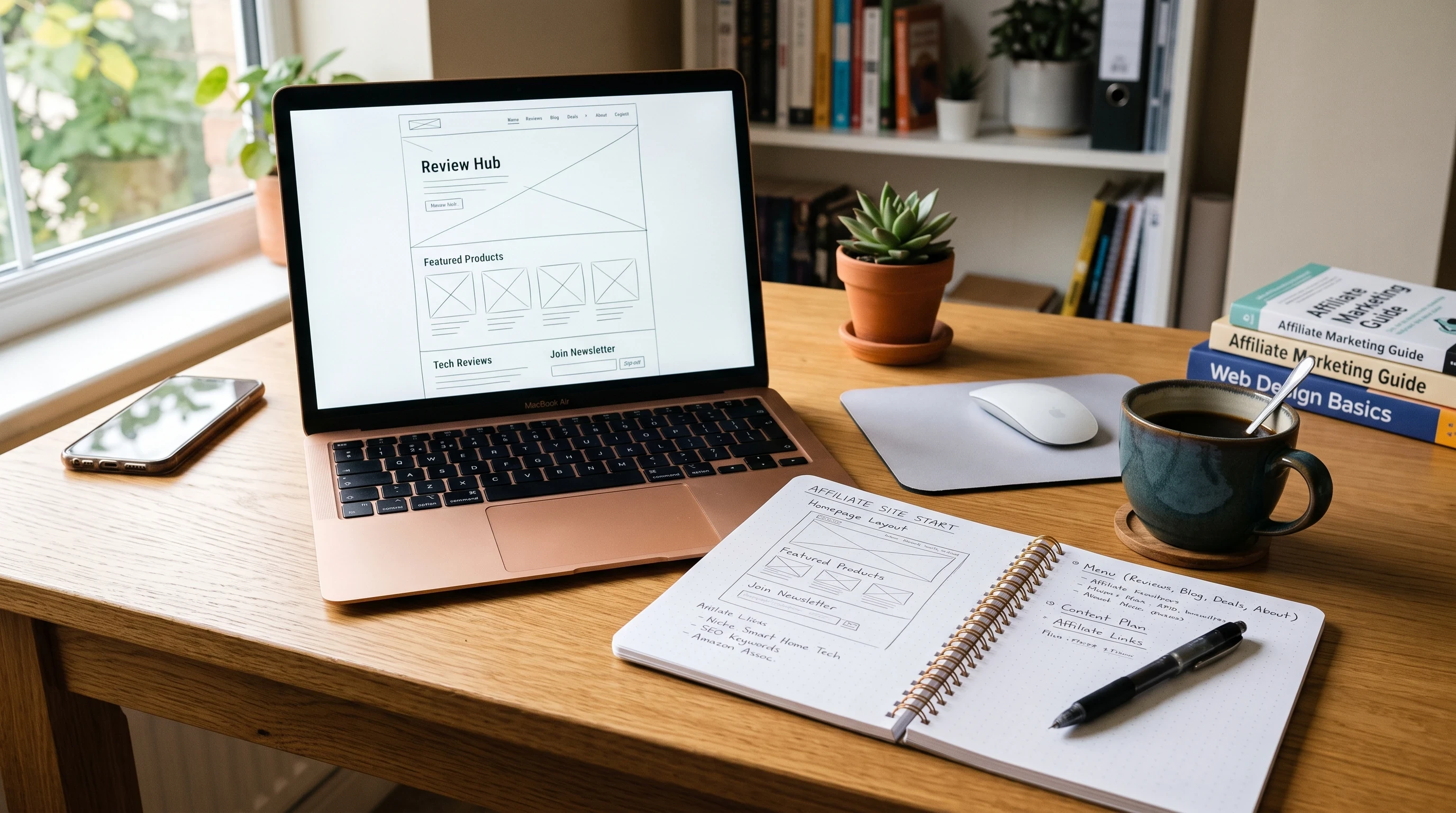
Add your logo, adjust colors to match your personality or brand, and set up menus so visitors can get around easily. The easier your website is to use, the longer people spend exploring your content.
Step 6: Research and Create Quality Content
This is where your site comes to life. Affiliate marketing is all about offering helpful content like guides, reviews, product roundups, and how-to articles. I get ideas by looking up common questions in my niche, checking forums, and seeing what people ask in Facebook groups.
Content Ideas for Affiliate Sites:
- “Best of” lists, like the best wireless earbuds for running.
- Detailed reviews of single products or services based on your experience or research.
- How-to guides that naturally mention useful products.
- Comparison posts between similar tools or brands to help readers make choices.
When adding your affiliate links, be open about it with a short disclosure. People appreciate honesty, and it keeps you on the right side of rules in places like the US or UK. By focusing on being genuinely helpful, you also build trust, which can lead to more sales over time. Consistency with your publishing schedule helps attract both readers and search engines.
Step 7: Start Getting Traffic
A website needs visitors if you want to earn commissions. I focus on a few solid ways to bring in traffic:
- Answering common questions on my blog using SEO best practices and targeting what people really search for.
- Sharing articles in online communities or on social media, such as Facebook groups, Reddit, and Pinterest.
- Building an email list from the start. Even if it only grows by a few people a week, it’s incredibly useful for keeping in touch later.
Google can take a while to send visitors, so spreading the word with sharing and networking is super important in the early days. Engaging in conversations, commenting on related blogs, or collaborating with others in your niche can boost exposure. The more relevant, helpful content you have, the more steady your traffic will grow.
Common Questions & Troubleshooting
What if I’m not technical? Can I still build a site?
Absolutely. Platforms and hosts have made things so much easier that almost anyone can do this without any coding. There are tons of YouTube tutorials for anything you get stuck on. I’ve been stumped before and always found a quick video to help. Don’t hesitate to ask questions in online forums or support groups—there are always others who’ve run into the same challenges and can help you out.
How many articles do I need before applying to affiliate programs?
Three to five well-written articles usually does the trick for most programs. Some, like Amazon Associates, let anyone in, but having a bit of content shows you’re serious and can increase your chances of getting accepted as an affiliate partner.
How do I find products to promote?
I use my own experience, visit online stores, and search for “best [product] for [need]” on Google. Checking what’s popular on Amazon New Releases or marketplaces like ClickBank helps, too. Reading customer reviews or joining niche communities can also help you spot trending products early.
Your Next Steps as a New Affiliate Marketer
Getting your first affiliate website live is a milestone worth celebrating. Each step—picking your niche, getting your site online, writing your first reviews—teaches you something new. Don’t worry if things aren’t perfect at first. Learning as you go is part of the adventure, and small improvements can add up to big results over time.
Quick Action Plan:
- Decide on your niche and domain name today.
- Set up hosting and install WordPress.
- Write your first two or three helpful articles for your audience.
- Apply to one affiliate program before the end of the week.
- Share your new website with friends, online communities, or on your social media profiles.
Got questions or need support? Drop them in the comments—I read every one and love helping new affiliate marketers get their sites off the ground. You’re not alone; with consistent effort and the right resources, affiliate marketing can become a rewarding way to earn online. Stay motivated, keep learning, and track down new opportunities as you grow.
Thank you for reading and sharing!
Related Posts