


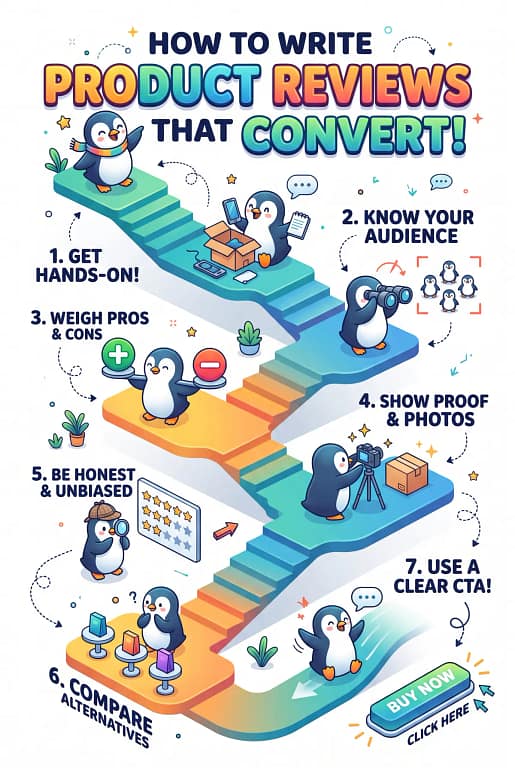
How To Write Product Reviews That Convert
Crafting a product review that actually persuades someone to click that “Buy Now” button isn’t always as easy as it looks. There’s a pretty big difference between listing features and writing the kind of review that gets people excited and ready to take action. I’ve spent a lot of time experimenting with different styles and structures, so I’m breaking down the best ways I know to write product reviews that get real results.
If you’re tired of writing reviews that barely get noticed or just don’t help your audience make decisions, you’re definitely not alone. It takes more than just listing pros and cons; there’s an art to building trust and offering value. The good news? Anyone willing to be honest, detailed, and a little bit strategic can write reviews that convert readers into buyers.
Here’s a detailed approach for writing product reviews that connect with readers and help them make the right purchase, plus a few tips I’ve found super useful for making your reviews stand out in a crowded space.
1. Start With Your Firsthand Experience
People crave honesty and want to hear from someone who’s actually used the product. Sharing your own experience right up front signals to readers that your review isn’t just recycled info from the manufacturer’s site.
For example, if I’m reviewing a coffee maker, I start with when and how I got it, what I noticed right away, and maybe a quick story about my first use, like how fast it brewed or if it made my morning routine easier. Even small details can show readers this is coming from someone real.
- Describe when and where you used the product.
- Share any early surprises, good or bad, that stood out.
- Be honest about learning curves or frustrations you encountered.
Personal stories, even short ones, prove you’ve actually had the product in your life, which builds trust quickly.
2. Understand Your Audience’s Pain Points
The most effective reviews aren’t really about the product; they’re about how the product solves your reader’s problems. Before you get deep into features and analysis, ask yourself who you’re writing for. What do they care about? What’s driving them to search for this review?
If you’re writing about headphones, for example, is your main audience commuters who want noise cancellation, or audiophiles who care about clarity? Mention the specific problems they’re hoping to solve, then show how the product measures up.
- List the top 2-3 pain points or needs your readers have.
- Map your review structure around answering those questions.
- Use phrases that echo reader concerns: “If you’re tired of…”, “Anyone frustrated by…”
Reviews that connect with what readers want or need always convert better.
3. Use Clear, Relatable Language (Skip the Jargon)
While it’s easy to slip into marketing speak, clear and casual language is way more relatable. Use words you’d say to a friend, and break down any technical bits in simple terms. That makes it easier for people to picture the product in their own lives.
Instead of, “It features advanced dualmesh filtering technology,” I’d say, “There are two filters inside, which means fewer grounds end up in your cup.” That’s much easier to understand, and it feels like real advice.
How to Make Your Review Super Readable:
- Use short paragraphs and plenty of white space.
- List features and benefits in bullet points.
- Avoid complex terms unless you’re sure your audience knows them.
4. Highlight Unique Features and Real Life Benefits
Listing out every feature can get boring fast. Instead, focus on cool features that actually matter in daily use. Describe why those features are handy, and give examples of how they made your life easier, or harder.
For example, “The built-in timer was really useful on busy mornings, so my coffee was ready right when I needed it.” This shows the benefit of a feature, not just that it exists.
- Choose 2-4 features that genuinely stood out to you.
- Explain how each one made a difference in practical, everyday terms.
- If something was less useful than expected, be upfront about it.
5. Compare With Similar Products
Readers appreciate it when you show them how the product stacks up against others in the same category. A short comparison table or section can help your review feel much more balanced and trustworthy.
I always mention if I’ve tried a few comparable models, even if just in a store or at a friend’s place. Point out clear differences that matter to your audience, like price, durability, or key features.
- Be specific: “This model lasted longer than Brand X, but it’s about $20 more.”
- If you haven’t used direct competitors, do a bit of research and include objective data.
- Your honesty on how it stacks up = more trust and better conversions.
6. Include High Quality Images or Videos
Visuals can give your review’s impact a boost way more than text alone. If possible, include original photos or a video demonstrating a feature you talked about. People want to see a real person interacting with the product, not just the company’s glossy images.
- Show the product in action, like making coffee or turning on a gadget.
- Photograph details the official site overlooks.
- No fancy camera needed; a clear, well lit phone photo works just fine.
Great visuals can tip curious readers into buyers since they remove a lot of uncertainty.
7. Be Honest: Pros, Cons, and Who It’s For
No one expects perfection. Readers trust reviews more if you openly talk about things you didn’t love, as well as the highlights. I always close with a pros and cons list and a summary of who the product is best for.
- List the 2-3 best things about the product.
- Mention any issues you found, even minor ones.
- Describe the kind of person this product is actually a great fit for, and who might want something else.
Honesty not only builds authority, it helps prevent buyer’s remorse and returns. When you add specific examples—like a product being too bulky for travel but perfect for a home office—you help readers make a decision they won’t regret. Also, sharing both positives and negatives paints you as a thoughtful reviewer rather than someone trying to make a quick sale.
8. Finish With a Clear, Friendly Call to Action
If someone’s made it to the end of your review, they’re probably pretty interested. Make it easy for them to take the next step. Whether that’s checking the latest price, signing up for more reviews, or trying the product themselves, be clear and encouraging, not pushy.
- Use phrases like: “Check current price here,” or “See other reviews if you’re still on the fence.”
- If you have an affiliate link or code, explain how it works transparently.
- Encourage questions or feedback in the comments.
Inviting engagement at the end also helps create a sense of community on your site or channel, which can lead to loyal return visitors who trust your opinion.
Final Thoughts
Writing a product review that actually converts comes down to honesty, detail, and putting your reader’s needs first. When you combine personal experience with clear information and a dash of personality, people listen, and act on your recommendations. If you’re aiming to build trust and boost your influence online, these strategies make a big difference. Don’t forget to always stay updated with industry trends and new product launches; that way, your reviews remain fresh and relevant. By consistently delivering valuable insights, you’ll grow your audience and become a go-to resource for trustworthy product advice.
Insightful Reviewer GPT
Offers reviews and critiques on various topics.