Sponsored Content & How to Find Opportunities
How to find brands worth working with, pitch a story worth reading, and keep your name on the byline with a straight face.
The email began, “We love what you do.”
Lovely. What I do is write about trees.
They wanted me to promote a casino.
Somewhere, I suppose, there was a connection. Both involve losing something you planted.
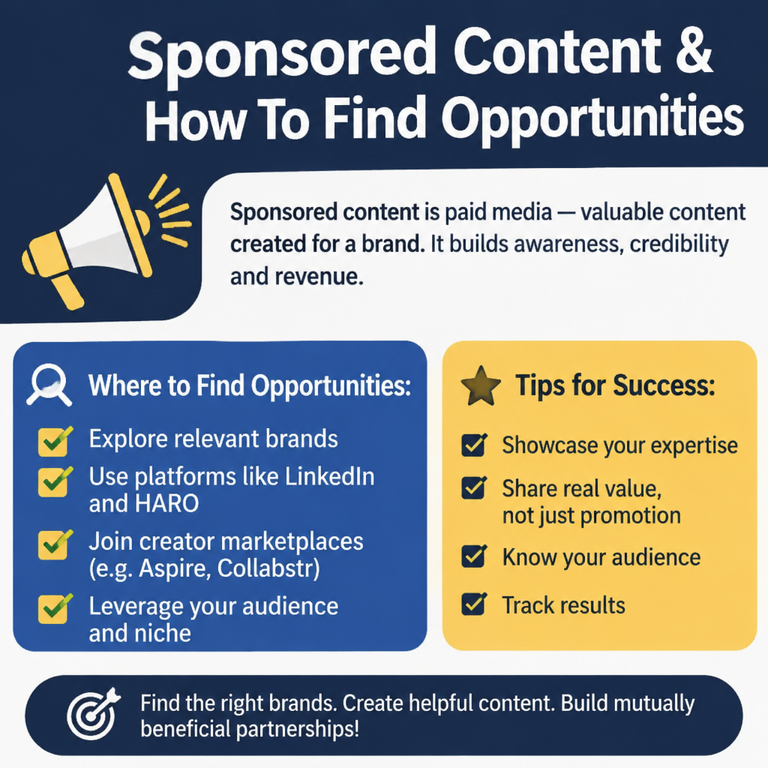
Sponsored content can pay for work your readers already want you to do. Start with a question they keep asking, find a brand with a credible role in the answer, and pitch a specific article, test, or tutorial. Then agree on what the brand is buying before anyone starts counting clicks.
What does a sponsor actually pay for?
A sponsor might fund a practical guide, a video demonstration, a newsletter feature, or a series. The agreement can cover your research and production, space on your site or in your newsletter, and permission for the brand to reuse the work. Those are three things you can negotiate separately.
Say you run a small vegan food blog. A cookware brand offers to fund a piece called “Can You Get Crispy Tofu Without an Air Fryer?” You try three methods, take photos, and tell readers which pan released the tofu cleanly and which one required a small archaeological dig. The brand gets a relevant demonstration. The reader gets dinner.
An affiliate arrangement pays a commission for a tracked sale or other agreed action. A sponsorship can pay a fixed fee for making and publishing the piece. A deal can include both. If it does, spell out the fee, the commission, and how sales will be tracked.
Where do you find sponsorship opportunities?
Start with the questions hiding in your own blog
Open three posts that bring in readers. Look at their search queries, comments, and email replies. Which problem comes up again and again?
Suppose the most visited page on your gardening site is about planting a young tree. Readers keep asking how often to water it in the first dry spell. A local nursery or a supplier of watering bags could help fund a field test. The article could cover how long a bag took to empty, how often you refilled it, and what you’d change on sandy soil. You already have a story and a reason to approach that particular business.
That’s also a better opening for a small blog. “Readers keep asking about this” gives a brand something concrete to consider, especially when you can show the article and its recent readership.
Follow the partnerships you already enjoy reading
Look at who sponsors newsletters, podcasts, and websites near your niche. Read a few of the sponsored pieces. Which brands let the creator demonstrate something, show a trade-off, or answer a real question?
Then look on LinkedIn or the company’s website for the person who handles partnerships, creator marketing, or communications. For a small business, the owner may be the right person. Send one idea that fits their business and your readers. A pitch addressed to “Dear Brand” has roughly the warmth of an unheated greenhouse.
Try marketplaces and media opportunities
Aspire connects creators with brand campaigns. Collabstr lets creators list services and packages. Before investing time in a profile, check whether the opportunities fit your country, niche, and format. If your strongest work is a detailed WordPress tutorial, look for briefs that value that kind of work. Aspire
HARO serves a different purpose. It connects journalists with expert sources. Answering a relevant query can help you build a portfolio of media mentions that you can share in future pitches. Help a Reporter Out
You can also make your own site easier to approach. A short Work With Me page can say who reads your site, which formats you offer, and how to reach you. Add two strong samples. A good independent tutorial shows a potential sponsor how you’d explain their product to a real person.
What does a pitch worth opening look like?
Give the brand something it can picture, forward to a colleague, and put a budget against. Here’s an example for a small home-and-garden blog.
Subject — A week of Belgian rain, one boot tray
Hi [Name],
Readers of my small-entryway guide keep asking how to stop muddy boots from taking over the hall. I’d like to test your washable boot tray through a week of ordinary use and write a practical guide to setting up a boot station in a narrow hallway.
I’d show what fits, what’s easy to clean, and what still ends up on the floor. The package would include a clearly labelled article with original photos, one mention in my newsletter, and a 30-day report on readership and outbound clicks.
Here’s the existing guide [link], along with a recent readership figure [metric and date range]. If this fits an upcoming campaign, I’d be happy to send a scope and fee.
Thanks,
The muddy floor does some work here. It shows the brand what you’ll actually test and gives the reader a reason to believe the clean part of the story.
What should you agree on before saying yes?
A brand may ask for “one little blog post.” That little post can acquire a photo shoot, three revisions, a newsletter slot, and a second career in paid advertising. Write down the scope while everyone still remembers what “little” meant.
| Agree on | What to put in writing |
|---|---|
| Deliverables | The article, photos, newsletter or social mentions, deadlines, and how long the piece stays live |
| Review | The number of revision rounds, who checks product facts, and who has final say over the conclusions |
| Payment | The fee, expenses, invoice date, payment deadline, and what happens if the project is cancelled after work starts |
| Usage rights | Where the brand may reuse the work, for how long, and whether that includes paid ads |
| Exclusivity | Which competitors are covered, on which channels, and for how long |
| Reporting | What you’ll measure, who supplies the data, and when you’ll report it |
For pricing, start with your own time and costs. An illustrative quote might be six hours of testing, photography, and writing at €60 an hour, plus €40 in expenses and €100 for the newsletter placement. That’s €500 for the agreed package. If the brand wants to run your photos in ads for three months, add a separate quote for that use. A tray may keep the floor clean. It has yet to pay an invoice.
For a hands-on review, agree in advance on what happens if the product fails the test. A brand can reasonably ask you to correct the dimensions or explain a feature you missed. Your reader is relying on you to say whether those dimensions actually leave room for two pairs of boots.
How do you disclose the deal?
Put a plain label where readers will see it before they get into the article. For a paid English-language post, that might read “Advertisement — [Brand] paid for this article.” For a Dutch-language post, use a clear label such as “Advertentie”or “Reclame.” Belgium’s FPS Economy guidance also covers benefits such as free products, loans, and affiliate commissions when you feature the brand. Describe the arrangement accurately and use the language of the post. FOD Economie
On your website, mark paid links with rel="sponsored" as Google recommends. The visible disclosure tells readers about the deal. The link attribute tells Google about the link. developers.google.com
How do you show whether it worked?
Ask the brand what it wants people to do after reading. A nursery introducing a new range may care about relevant readers discovering it. A brand launching a product may want visits to its product page. A sponsor offering a discount may want to count redemptions.
Pick a measure that fits the goal and agree on a reporting window. For example, after 30 days you might report 820 article views, 47 tracked outbound clicks, and 6 code redemptions reported by the brand. Those figures are illustrative. In a real report, say where each number came from. Tracked clicks and redemptions show what you observed during the campaign. They can’t tell you how many of those people would have bought anyway.
Include one thing you learned. Perhaps readers kept asking whether the tray fit under a narrow bench. That’s useful feedback for the brand, and it might be the opening line of your next article.
Start with one story you’d write anyway
Pick a question you’ve answered three times. Find five brands that could credibly help you answer it better. Send your best idea to the two that fit most naturally.
Before you agree to anything, imagine a regular reader opening the piece on a Saturday morning. Would they learn something they could use? And if the boots leaked all over the hall, would you still be free to show the mud?