
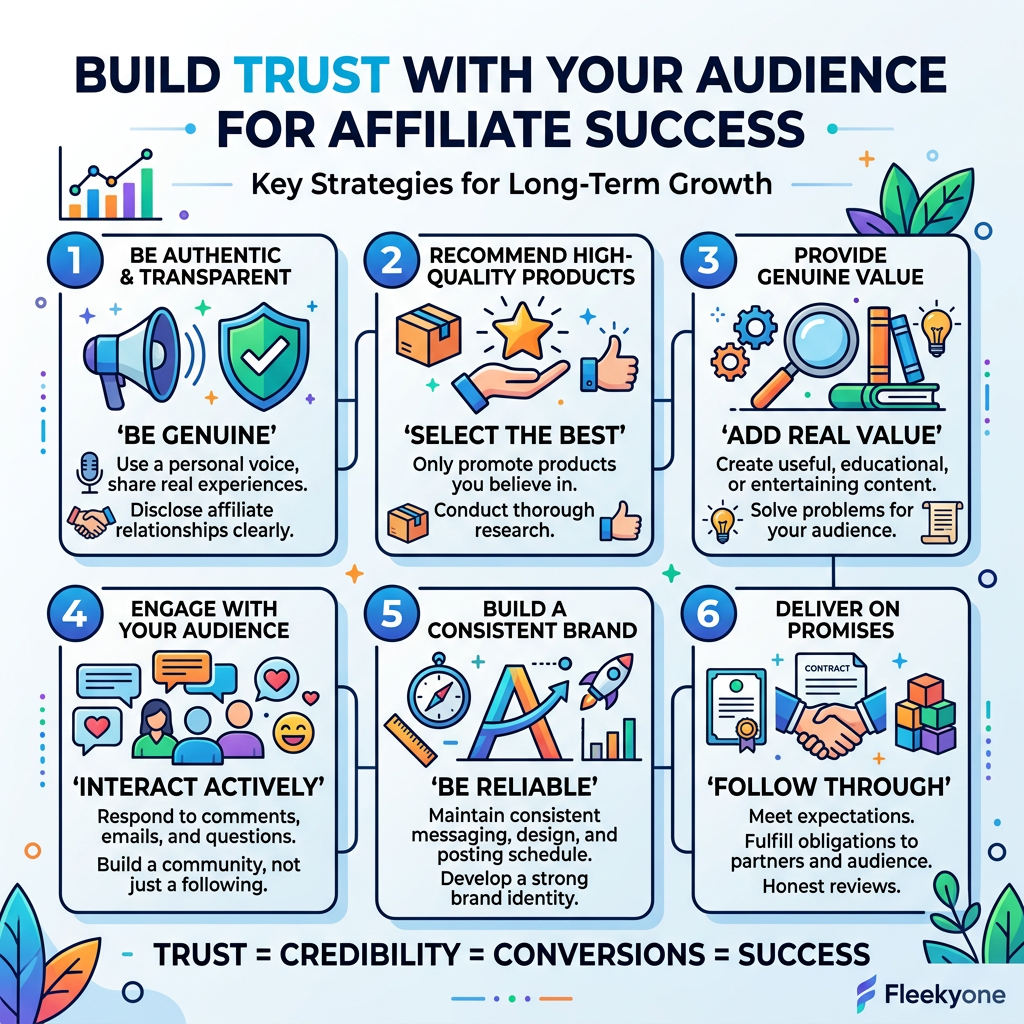
Build Trust With Your Audience For Affiliate Success
Genuine trust between you and your audience is the not-so-secret ingredient for winning at affiliate marketing. When people believe you, they follow your recommendations, and everyone benefits. It sounds obvious, but developing this kind of relationship takes real effort. It’s super important for long-term success, with commissions that keep rolling in.With all the noise online, readers are picky about who they listen to. Sketchy “review” sites and pushy promos have left folks wary. But if you focus on being honest and providing value first, you’ll have folks coming back not just for suggestions, but for actual advice they trust.
This guide covers practical, straightforward ways to build trust with your audience, so your affiliate links don’t just get clicks. People actually feel good making those purchases and appreciate your recommendations.
Step 1: Get Clear on Who You’re Helping
Before you can earn trust, you need to know exactly who your audience is. Trust isn’t one size fits all; it starts with understanding what your readers care about, what problems they’re trying to solve, and the type of help they’re actually looking for.
Questions to Think About:
- What are the main struggles or questions in your niche?
- Why are people visiting your site or following your channel?
- What tone and topics do they respond best to?
- What level of experience do they have with your topic?
Examples of Focusing Your Approach:
- Reviewing beginner fitness gear for new parents instead of all fitness gear in general.
- Creating an in depth resource for DIY gardeners navigating their first season.
Knowing your audience this well lets you meet them where they are, rather than just promoting stuff for the sake of it. You create a unique bond and position yourself as a must-read resource in your space.
Step 2: Be Upfront and Authentic With Every Recommendation
People quickly spot when someone’s just trying to make a quick sale, which can scare them off for good. Being honest about your affiliate relationships keeps your reputation solid and makes you relatable.
Ways to Stay Transparent:
- Add simple disclosure notes at the start of your posts or videos.
- Explain why you’re recommending a particular product or service in your own words.
- Don’t just rave; include both the pros and the cons you’ve noticed.
Pro Tip:
Share specifics from your own experience. For example, if you’re recommending a tool that you’ve used for months, mention the real results and occasional frustrations you’ve had with it. This honesty can help foster a real bond with your audience, making them more likely to trust your opinions in the future.
Step 3: Deliver Real Value Before Pitching Anything
Trust is built on giving, not taking. When readers get consistent value from your content, they’re much more likely to click an affiliate link out of genuine interest instead of obligation. In fact, regular value creates a foundation where readers almost anticipate and welcome your recommendations because they know you’re there to help, not just sell.
Ways to Provide Value:
- Publish educational how to guides that solve common problems.
- Create comparison charts or detailed breakdowns to help readers make decisions.
- Offer troubleshooting resources for products you recommend, such as setup tips or answers to common issues.
- Share free downloads or templates related to your niche.
- Host Q&A sessions to answer common questions and dig deeper into topics your readers care about.
When you focus on helping first, your promotions come across as helpful tips, not random sales pitches. Readers value your insights, which makes them far more receptive to affiliate offers you mention.
Step 4: Use Consistent Messaging and Show Up Regularly
People trust brands and creators who keep showing up and delivering on their promises. A steady voice lets your audience know what to expect, building reliability over time. Consistency doesn’t just mean showing up on time; it also means keeping your communication style, your opinions, and your content quality stable. That way, your audience gets to know you and look forward to your next piece.
How to Build Consistency:
- Post on a regular schedule, whether it’s weekly blog articles, a YouTube upload every Friday, or frequent emails.
- Use a consistent visual style and tone across all channels so people recognize you instantly.
- Stick to your niche instead of jumping between unrelated topics.
- Remind your audience of what you stand for by referencing your core values or purpose.
Example:
My readers know I send out a gear review email every Thursday. Over time, they’ve come to look forward to honest reviews and quick tips in their inbox. This regular rhythm builds comfort and trust because my audience knows what to expect from me each week, making it easy for them to stay engaged.
Step 5: Encourage and Highlight Reader Feedback
Nothing builds trust faster than real conversations. When you make space for feedback, questions, or even gentle criticism, your audience feels heard. That connection is worth more than a hundred sales. It also demonstrates humility and a willingness to improve, showing your readers that you value their input.
Ways to Get Involved With Your Audience:
- Ask for questions at the end of posts or on social media platforms.
- Feature usersubmitted testimonials, reviews, or success stories, with permission.
- Respond sincerely to emails, comments, or direct messages. Even letting folks know when you don’t have all the answers yet makes a difference.
- Encourage constructive feedback and use it to improve your content or recommendations.
You’ll notice that involvement goes up when people see you’re actually there. Helping, not just selling, fosters a close-knit community that will advocate for your brand naturally.
Step 6: Only Promote Products You Know and Stand Behind
It’s tempting to sign up for every affiliate program that fits your niche, but recommending products you wouldn’t use yourself can quickly undermine trust. Remaining selective is critical; it sends the message that you care more about your audience’s well-being than about a quick commission.
How I Choose What to Promote:
- I test every product myself, or at least do lots of research from trusted sources.
- I ask myself: Would I honestly tell my best friend to buy this?
- If I haven’t used something personally, I mention that and point to thirdparty reviews or authoritative resources for backup.
- Keep product recommendations current by regularly reviewing them to ensure they still meet your audience’s needs.
Turning down a sketchy product or lowquality offer is sometimes the best move for your reputation. Repeat readers, loyal followers, and long-term commissions are the real goal. Your audience will appreciate your selectiveness, and your recommendations will carry more weight because they know you only stand behind products you genuinely trust.
Common Questions & Possible Roadblocks
Is disclosing affiliate links really that important?
Absolutely. Not only is it legally required by the Federal Trade Commission (FTC) in many countries (official guidelines here), but it shows you have nothing to hide. People are much more likely to trust you if you’re straightforward about how you earn. Trustworthy creators explain affiliate links clearly and refuse to hide affiliations for profit.
What if I recommend something and a reader has a bad experience?
- Apologize and help them troubleshoot or find alternatives.
- Update your content to reflect new info, and don’t ignore negative feedback.
- Consider removing or replacing products if you learn they don’t live up to promo promises. Your reputation grows when you own up to mistakes.
How can I compete with bigger affiliate sites?
Large review sites are everywhere, but you can offer unique personal stories, unbiased advice, or ultraspecific guides for your audience. You’re more nimble and approachable, which increases trust for smaller niches. By focusing on real relationships and small but dedicated communities, you can carve out a loyal following, even in crowded markets.
Final Tips & Action Steps for Building Trust
Trust in affiliate marketing is something you create day by day; there’s no shortcut. If you put your audience’s needs first, stay honest, and show up for real conversations, both your reputation and commissions will grow steadily over time. Keep in mind, fostering trust is more about building long-term value for your audience than about getting quick wins.
Quick Action Plan:
- Pick one product you love and write a super honest review, complete with pros, cons, and practical usage tips.
- Add clear affiliate disclosures to all posts, videos, or emails that include links.
- Ask your audience what reviews or guides they want to see next, then deliver.
- Foster authenticity by sharing your learning process and occasional missteps along your affiliate marketing adventure.
What’s one way you like to build trust with your audience? Drop your own strategies or questions below. I’d love to hear what’s working for you. The more we share, the stronger our communities become!