

Common Pitfalls In Analytics And How To Avoid Them
Analytics is an exciting field that promises valuable insights, but it comes with challenges that can create pitfalls. I have seen how data mistakes and misinterpretations can disrupt projects. This article reviews common pitfalls in analytics and offers practical guidance on avoiding them.
Common Pitfalls in Analytics
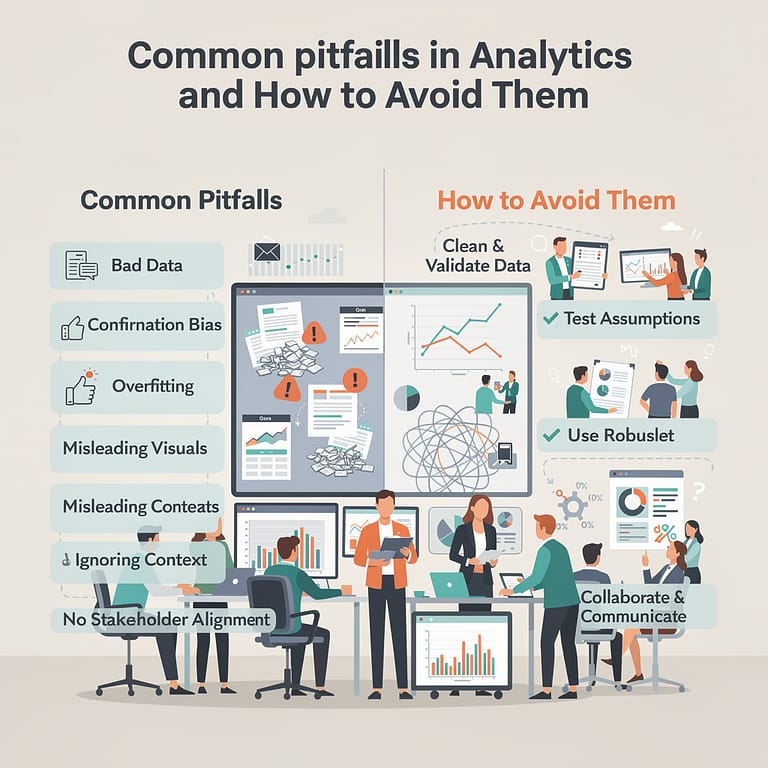
Analytical errors often stem from the way data is collected, processed, or interpreted. Many teams fall into similar traps. I have found that one of the most common pitfalls is failing to ensure quality data before beginning any analysis. Poor data can lead to misleading conclusions. When basic information is flawed, interpretations can turn out to be more of a wild guess than a solid conclusion.
Another issue is relying too much on quantitative data while ignoring the context. Numbers do provide insights, but without the accompanying narrative, the numbers might not tell the full story. Analysts sometimes focus on metrics that do not align with business goals, or they select the wrong metrics to monitor. Understanding which data is relevant for a particular question is essential.
Lastly, the overcomplication of processes can be a pressure point. Overly complex dashboards and advanced analytics techniques can leave team members confused. It is important to strike a balance between detailed insights and clear, actionable information.
To add further details, it is necessary to consider that pitfalls in analytics not only originate from the data itself but also from the design of the analytical framework. Complex systems may obscure visible errors and cause decision-makers to overlook simple yet impactful issues. By breaking processes into more manageable steps and verifying the accuracy at each stage, teams can avoid many common mistakes. This extra layer of preparation can be the difference between a successful project and one fraught with errors.
Start with Best Practices in Analytics
Before running complex models, it is valuable to start with the basics. I have stumbled upon that clarity and simplicity are beneficial when establishing an analytics strategy. The initial step involves ensuring that the data collected is accurate and relevant. This might mean a thorough review of data sources and an audit of data collection processes.
Many teams rush into analysis without spending enough time on data validation. It is very important to invest time in data cleaning. Small errors, such as duplicates or missing fields, could skew results significantly. Investing extra time at the start helps avoid the need for major corrections later.
Beginning with simple visualizations also makes the process more accessible to team members who are new to the field. Dashboards that display metrics clearly and concisely help in making informed decisions. Understanding key performance indicators (KPIs) is not something you develop overnight; it grows over time with repeated practice and review.
Expanding on these points, it is beneficial to develop a routine check-in process that revisits the basic building blocks of your analytics strategy. Regular team meetings to review the consistency of data collection processes, share insights from early-stage analyses, and reaffirm the objectives of the analysis can significantly reinforce the fundamentals. This routine not only builds trust in the quality of the data but also helps each team member become more comfortable with the overall process.
Key Areas Where Mistakes Occur
Many pitfalls in analytics stem from a few key areas. I have seen that focusing on these can help businesses shape more reliable strategies. The following list outlines several of the main areas where mistakes tend to happen:
- Data Quality: Without accurate data, even the best analytics practices can fail. It is very important to check for errors, omissions, and inconsistencies in the data set. Poor-quality data can send you down the wrong path or lead to false confidence in your insights. In practical terms, this means routinely cleaning your data and verifying it at multiple stages of the process.
- Overreliance on Metrics: Numbers provide speed, but they may hide the underlying factors. Looking solely at quantitative data can result in neglecting trends that are not immediately obvious. Supplement numeric analysis with qualitative insights to paint a fuller picture. For example, combining statistical reports with customer interviews often reveals a depth that numbers alone cannot capture.
- Lack of Context: Data does not exist in isolation. The surrounding environment or market dynamics should be taken into account. Analytical outcomes often require business context to truly be understood and applied effectively. Including broader trends, competitor actions, or seasonal changes can completely alter the interpretation of the data.
- Misalignment with Business Goals: Analytics must serve the overall goals of the business. Sometimes, teams focus on data that does not add value to strategic decisions. It is important to keep the connection between metrics and overall objectives in clear view. Clearly defined objectives help create a more focused analysis that directly supports business strategy.
Building on this, it is advisable to undertake a periodic review of the entire analytical process. Teams should map out which areas are excelling and which need further attention. This reflective practice not only highlights past oversights but also motivates continuous improvement in data handling practices.
Get Started with Analytics Best Practices
Many common obstacles can be tackled by establishing a clear and systematic approach to data. I have found that it helps to start with a plan that covers the entire data life cycle. This planning stage includes how data is collected, cleaned, analyzed, and finally reported. Here are some actions that have proven effective:
- Define Your Objectives Clearly: Understand what questions you want to answer. Clear objectives help in selecting the right data and analysis methods. Without clear goals, the process can become misguided and inefficient.
- Invest in Quality Data Collection: Ensure your data collection methods are robust and sustainable. Quality data lays the foundation for valid insights. Consistently reviewing and testing these methods will protect your process from unexpected errors.
- Focus on Simplicity: Use simple and transparent methods initially. Avoiding overcomplicated systems can reduce errors and miscommunications among team members. Keeping techniques straightforward improves overall team accessibility and accuracy.
- Implement Regular Audits: Continuous checks and validations help maintain data integrity over time. Regular audits can catch potential issues early, ensuring that the insights derived from the data are as accurate as possible.
- Encourage Cross-Departmental Collaboration: Bringing different perspectives to the analysis process can add valuable context. Coordinating across teams ensures that the insights are grounded in reality. Sharing challenges and breakthroughs fosters a more dynamic and comprehensive approach to data analysis.
Taking these simple steps not only improves the quality of the analysis but also boosts confidence in the results. Consistent processes reduce risks and lead to better, informed decisions over time. It is also important to review and update your processes as the data landscape evolves, ensuring that your strategy remains effective and agile in a changing environment.
Moreover, regular training sessions for team members can be invaluable. Organizing workshops where staff can share experiences and discuss recent trends in data analytics further reinforces the foundational practices and inspires innovative ways to approach common challenges.
Address Specific Challenges in Analytics
Some challenges in analytics hit teams harder than others. I have noticed that addressing these specific points can pave the way for smoother operations. When teams are proactive in addressing their specific challenges, it sets a path for sustained improvement and operational clarity.
Data Quality
One of the very important areas to focus on is data quality. When the source information is flawed, you are at risk of developing conclusions that do not line up with reality. I have seen projects delayed or even derailed by errors that could have been corrected early. Regular updates or data cleaning processes are effective ways to ensure that the information remains reliable over time.
In addition, establishing clear protocols for data entry and maintenance can revolutionize your overall data quality. Routine error-checking mechanisms, such as automated notifications for missing or inconsistent data, help in keeping the dataset accurate and trustworthy. Sharing best practices among team members reinforces these processes and ensures that everyone contributes to high-quality data management.
Overreliance on Quantitative Metrics
Focusing solely on numbers is a familiar mistake. Quantitative data is valuable, yet it might miss out on the nuances that a more qualitative approach uncovers. I have seen instances where careful interviews or case studies could have filled an important gap. Balancing numeric data with qualitative input improves the overall understanding of the subject matter and prevents oversights.
To further expand on this point, consider implementing mixed-methods research where surveys and numerical datasets are complemented by in-depth interviews or focus groups. This approach not only broadens the context of your analysis but can also uncover hidden patterns that pure numbers would not otherwise reveal. Encouraging team members to actively seek out qualitative stories often sparks new ideas and leads to more comprehensive insights.
Misinterpretation of Trends
Trends observed in analytics do not always imply causation. I have found that mistakes occur when analysts jump into conclusions based solely on correlations. Careful statistical tests and a thoughtful review of the relationships between variables help in avoiding these pitfalls. Knowing that one event causes another requires strong evidence and careful reasoning.
It is also advisable to supplement trend analysis with external benchmarks or historical data comparisons. Often, integrating contextual information from industry reports or seasonal variations allows for a more accurate interpretation of trend data. By systematically comparing current trends with past cycles, teams can better understand underlying factors and avoid the trap of oversimplification.
Privacy and Ethical Considerations
In today’s environment, data privacy is a serious concern. Overlooking privacy issues can lead to significant legal and reputational risks. I have learned that building robust privacy protocols, such as data encryption and anonymization, is essential. Ethical management of data not only protects the company but also builds trust with customers and stakeholders.
In addition, establishing a culture of staying sharp regarding privacy concerns can be transformative. Regular training regarding new regulations and ethical standards helps all team members stay current. Setting up a dedicated review process for compliance ensures that ethical standards are embedded in every analytical process.
This focus on key challenge areas ensures that each stage of your analytics strategy is built on solid ground. Addressing these aspects head-on results in a more reliable and trustworthy process. Businesses that invest in thorough privacy measures often experience enhanced customer trust and sustainable long-term success.
Advanced Tips and Tricks
Once you have the basics set up, taking up a notch in your analytics game can bring your work to a next-level cool state. I have adopted several advanced techniques that improve overall analysis and interpretation without making the process overly complex.
Use Segmentation Effectively: Breaking down your data into segments can provide more targeted insights. Whether it is by product line, customer demographics, or time periods, segmentation helps pinpoint exactly where issues or opportunities lie. Breaking the data into logical segments leads to decisions that are much more focused and relevant to each specific group.
Employ Predictive Analytics: Predictive techniques can help forecast future trends. With tools that combine current data with historical patterns, you can anticipate what might come next. Predictive models are particularly useful in allocating resources or planning marketing campaigns. I have found that taking proactive measures based on these insights often leads to early problem detection. This proactive approach can prevent small issues from turning into larger challenges.
Use Data Visualization Tools: High-quality visualizations turn complex data sets into insights that anyone can understand. Graphs, heat maps, and charts make patterns and trends visible at a glance. Good visualization practices remove the complexity of raw data. Visual summaries allow decision-makers, even those who do not have a deep background in analytics, to quickly grasp the essential points.
These advanced tips come from my real-world experiences where each improvement brought about a clearer understanding of the data. With continuous learning and adaptation, improving analytics can be an ongoing process that adds value in small but important increments. Many organizations find that investing in advanced tools and training results in significant improvements, letting data really drive strategy forward.
Essential Tools and Techniques for Reliable Analytics
Many pitfalls in analytics can be overcome with the right tools and techniques. I have used some software and methodologies that have proven effective in several projects. The right tools not only improve data accuracy but simplify the overall analysis process.
It is important to choose software that fits your team’s needs. Analytics tools today range from basic spreadsheets to advanced business intelligence platforms. I have learned that even teams with limited resources can benefit from accessible and user-friendly tools. In addition to software, well-defined data processes help maintain consistency and quality over time.
- Data Cleaning Tools: Automating the process of checking and correcting data saves time and step up accuracy. These tools help flag inconsistencies early in the process and prevent errors from propagating through your analysis.
- Visualization Platforms: Tools that turn raw data into charts and graphs help in quickly deriving insights. They are particularly useful in meetings where clear communication of trends is needed. Clear visuals can spark discussions and help teams align on the next steps.
- Predictive Analytics Software: Software that supports forecasting and trend analysis can signal changes early. This makes it easier to adjust strategies before small issues become big problems. Predictive tools can also assist in resource planning and preemptively addressing market changes.
The careful selection of tools and techniques can streamline the process, ensure data integrity, and make analytics a practical asset in decision-making. I have found that the tools I choose today can also be scaled as my needs grow over time. The right balance of technology and human insight helps uncover hidden opportunities and improve overall performance.
Furthermore, it is really important to keep exploring newer methodologies and integrating them with your existing systems. Regularly attending data conferences, webinars, and training sessions can equip teams with fresh ideas and innovative tools. This ongoing education ensures that your analytical strategies remain ahead of the curve.
Frequently Asked Questions
Here are some common questions that often arise when dealing with analytics pitfalls:
Question: How can I avoid errors caused by poor data quality?
Answer: Performing regular audits and cleaning data consistently is key. I recommend investing time at the start of any project to ensure that the data being used is reliable and accurate. In addition, implementing automated data validation tools can significantly reduce manual errors.
Question: What are some effective strategies to balance qualitative and quantitative insights?
Answer: It is helpful to combine data statistics with real-world context. Including surveys, interviews, or case studies alongside numeric data can provide a more complete picture. This combination gives you the ability to cover all facets of the analysis without relying solely on one type of data.
Question: How can companies deal with the overreliance on metrics?
Answer: I advise taking a step back to review how the selected metrics align with overall business goals. Constantly revisiting and refining the chosen KPIs makes the process more relevant and accurate. Balancing the numbers with qualitative feedback is a proven way to avoid tunnel vision.
Question: How should privacy concerns be addressed in analytics?
Answer: It is important to maintain transparency with data subjects and follow the latest regulations. Effective data anonymization and secure storage practices help protect sensitive information. Regular privacy audits and staff training on data ethics further ensure robust protection measures are in place.
Wrapping Up
Paying close attention to the common mistakes in analytics helps ensure that insights lead to effective decisions. I have observed that a focus on data quality, the balance between numbers and context, and rigorous validation processes transforms data into a reliable resource. The challenges in analytics are real, but planning ahead and using the right strategies makes it possible to avoid these pitfalls.
Analytics is an adventure. With thoughtful practices and a consistent methodology, you can build a robust system that grows with your business needs. Embracing best practices not only leads to better decision-making but creates a foundation of trust in the insights you gather. Start refining your analytics processes today and experience how consistent improvements can lead to better business outcomes.
By continually reviewing your strategies and integrating proven techniques, you can transform early setbacks into stepping stones for success. As teams learn to balance quantitative metrics with qualitative stories, they build a more resilient and informed approach. This mindset shift—from simply reviewing numbers to truly understanding the story behind them—ensures that your analytics efforts will be both practical and inspiring.
In addition, fostering a culture of collaboration and constant improvement can make a huge difference. Encourage conversations, share success stories, and learn from past mistakes. When everyone in the organization feels involved in the data process, it not only improves overall quality but also drives innovation and confidence. Ultimately, it is this comprehensive yet accessible approach that turns everyday data into a powerful tool for growth.
This article has aimed to provide a clear roadmap for avoiding common pitfalls and stepping up your analytics strategy. By keeping your focus on quality, context, and continuous learning, you can ensure that your data delivers real, actionable insights that propel your business forward.
Remember, effective analytics is a blend of technology, process, and people. Nurture your analytical capabilities and foster an environment where data is as valued as the insights it produces. With the right approach, you not only prevent potential missteps but also harness the full power of your data to drive your business to new heights.
Ready to turn your passion into profit?
Join the Wealthy Affiliate Bootcamp and learn step-by-step how to promote WA (and apply the same strategies to any niche).
👉 Build skills.
👉 Grow traffic.
👉 Create success on your terms.
Your journey starts here. Why not today? ✨


